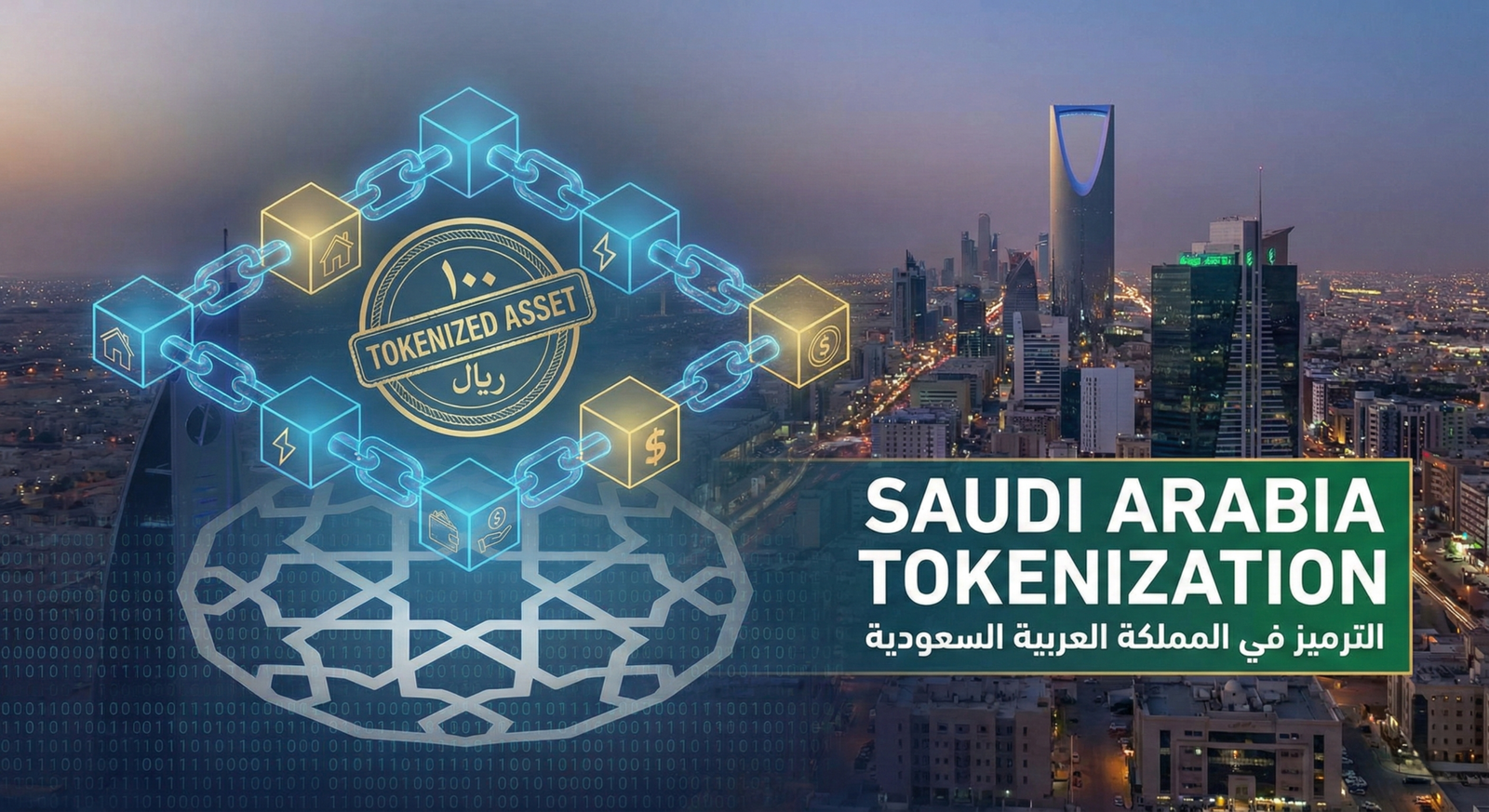

Asset tokenization is moving from concept to execution in Saudi Arabia, particularly in real estate. The promise is compelling: fractional ownership, improved liquidity, broader investor access, and faster capital formation.
Yet for many executives, the biggest obstacle is not technology, it is regulation. Two regulators. Two sandboxes. One market trying to move fast without missteps.
This article provides a clear, practical roadmap for navigating real estate tokenization in the Kingdom.
Why Regulation Matters More Than Technology
Tokenization is often discussed as a blockchain or fintech innovation. In reality, it is primarily a legal and regulatory transformation of ownership and investment structures.
In Saudi Arabia, how you structure your token determines who regulates you, how long approval takes, and whether your model scales.
The key question is simple:
What does your token represent in economic and legal terms?
The Two Regulators You Must Understand
- Real Estate General Authority (REGA)
الهيئة العامة للعقار
REGA is your primary regulator when tokens represent fractional ownership of real estate assets, aligned with traditional ownership principles.
This typically mirrors the Musha’a (مشاع) concept, shared ownership where each holder has proportional rights and obligations based on their stake.
When REGA is the right path:
- Tokens represent direct ownership in a real estate asset
- No promise of fixed returns or dividends
- Value is realized through development, appreciation, or sale
Best Use Case: Real Estate Contributions (المساهمات العقارية)
This is currently the fastest and most practical regulatory path.
Example:
- Acquire land
- Develop residential or mixed-use property
- Token holders own fractional shares
- Asset is sold, proceeds distributed pro-rata
From a business perspective, this model is closer to crowd-enabled real estate development than financial securities.
- Capital Market Authority (CMA)
If your token behaves like a financial instrument, the CMA becomes your regulator.
The rule of thumb is straightforward:
If it walks like a share and pays like a share, the CMA regulates it.
When CMA applies:
- Tokens represent an investment vehicle rather than direct ownership
- Income-generating assets (e.g., rental properties)
- Periodic payouts or dividends
- Fund-like or REIT-style structures
Best Use Case:
- Commercial real estate
- Rental income portfolios
- Tokenized REIT-style vehicles
This path brings higher compliance requirements, but also stronger investor protections and institutional credibility.
The Overlooked Sweet Spot: Joint REGA + CMA Licensing
Many founders assume that dual regulation means complexity and delay. In practice, the opposite is often true.
Real Estate Contributions that involve structured fundraising or distribution mechanics typically require joint oversight from REGA and CMA.
Why this matters:
- Regulatory coordination already exists
- Roles are clearly defined
- Legal ambiguity is reduced, not increased
- Investors gain confidence from dual supervision
For serious operators, this is often the clearest and most defensible path to market, especially for large-scale developments.
A Simple Decision Tree for Executives
Ask yourself three questions:
- Is the token ownership or investment?
- Ownership → REGA
- Investment → CMA
- Is there periodic income or dividends?
- Yes → CMA
- No → REGA
- Is capital raised for development and exit via sale?
- Yes → Real Estate Contributions (REGA, often joint with CMA)
This clarity allows leadership teams to focus on execution instead of regulatory guesswork.
Strategic Implications for the Saudi Market
Saudi Arabia is uniquely positioned to lead real estate tokenization:
- Strong regulators with sandbox frameworks
- Clear real estate development pipelines
- Growing appetite for alternative investment models
- Alignment with Vision 2030 capital market expansion
The winners will not be those with the most advanced technology, but those who structure correctly, license intelligently, and build trust early.
Final Thought
Tokenization in Saudi Arabia is not a regulatory gray zone. It is a structured environment with clear entry points, if you understand how to navigate it.
For executives, the mandate is clear:
- Treat tokenization as a business and regulatory strategy
- Choose your regulator by economic substance, not terminology
- Use existing frameworks instead of trying to reinvent them
Done right, tokenization is not disruption, it is evolution.
Husam Yaghi
hyaghi@gmail.com